
Introduction
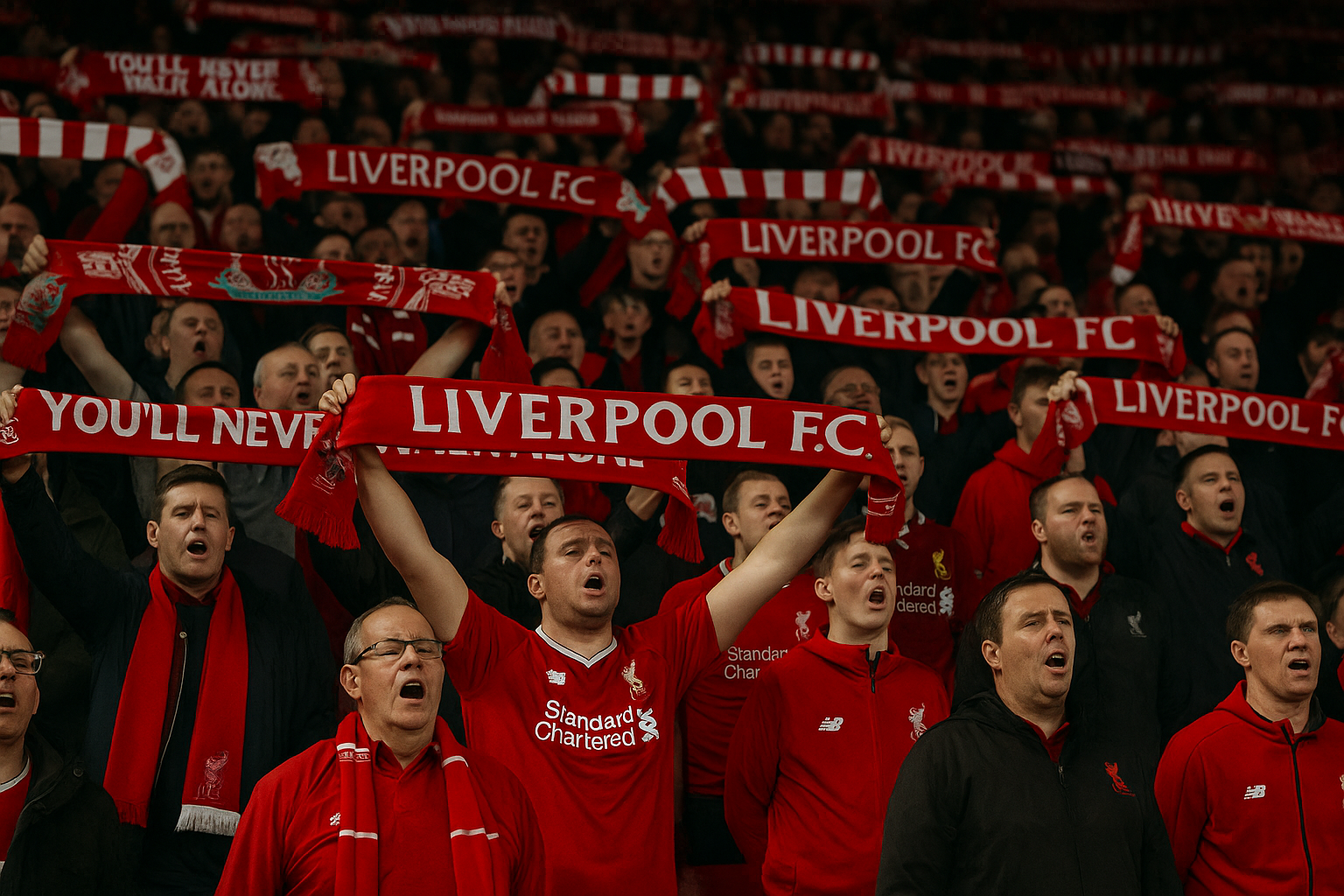
Liverpool supporters are known worldwide for their passion, unity, and unforgettable songs.
But each chant has a story — a deeper meaning rooted in history, emotion, victories, and heartbreak.
This guide explores the meaning behind Liverpool fan chants, revealing how they connect generations of Reds supporters.
Why Liverpool Chants Carry Deep Meaning
Unlike many clubs, Liverpool’s chants are not just “noise.”
They come from the culture of the city — humor, pride, resistance, loyalty, and identity.
Liverpool fans don’t just sing about the club; they sing as part of it.
This emotional connection is why the chants feel powerful and timeless.
Meaning Behind Liverpool Fan Chants: YNWA – The Eternal Anthem
The most famous chant in football history.
“You’ll Never Walk Alone” represents unity, courage, and hope.
It became Liverpool’s anthem in the 1960s, but its meaning deepened after tragedies like Hillsborough.
Today, the Kop sings it before every match as a declaration of support — for players, for fans, for the city.
“Allez Allez Allez” – The Modern European Anthem
This chant became iconic during Liverpool’s Champions League run in 2018.
Its meaning?
European passion.
Traveling the world.
Writing new chapters in the club’s history.
It’s fast, loud, and perfectly expresses the energy of modern Liverpool supporters.
The Meaning Behind Player-Specific Chants
Liverpool fans create songs to honor players they admire.
Examples include:
- “Mo Salah, running down the wing” – celebrating the Egyptian King
- “Si Señor” – the beloved Roberto Firmino chant
- “There’s something that the Kop wants you to know” – the Virgil van Dijk anthem
These chants show affection, pride, and respect — and often push players to perform even better.
The Kop’s Humorous and Creative Chant Culture
A huge part of the meaning behind Liverpool fan chants lies in humor.
The Kop is famous for witty, clever, sometimes hilarious songs aimed at rivals or celebrating a big moment.
This creativity is a defining part of Liverpool’s fan identity.
“Fields of Anfield Road” – A Song of History and Emotion
This chant retells Liverpool’s story — from victories to struggles.
It honors legendary players and moments while reminding fans of the club’s emotional journey.
When sung loudly, it creates a spine-tingling connection across generations.
Rivalry Chants – Passion Without Hate
Liverpool fans often sing passionately against rivals, but with a unique tone:
Sharp, clever, mocking — but rarely hateful.
This reflects the club’s deeper values of respect, humor, and football spirit.
Why Chants Matter So Much at Anfield
Because they create the atmosphere.
They turn Anfield into a fortress.
They unite 50,000 fans into one voice.
They inspire players and intimidate opponents.
And most importantly — they keep the club’s culture alive.
Conclusion
The meaning behind Liverpool fan chants goes far beyond words.
These songs are emotional stories — about the city, the players, the club, and the supporters.
Every chant echoes decades of pride, heart, and tradition.
This is why Liverpool’s singing culture is respected around the world.
More Content You’ll Enjoy:
Relive Liverpool’s Most Legendary Anfield Nights
https://illfc.net/liverpool-european-nights/
Inside Anfield: The Ultimate Matchday Guide
https://illfc.net/matchday-at-anfield/
Reliable Liverpool FC Sources:
Official Liverpool FC – Global Supporters Clubs
https://www.liverpoolfc.com/fans/official-lfc-supporters-clubs
BBC Sport – All Liverpool FC News
https://www.bbc.com/sport/football/teams/liverpool